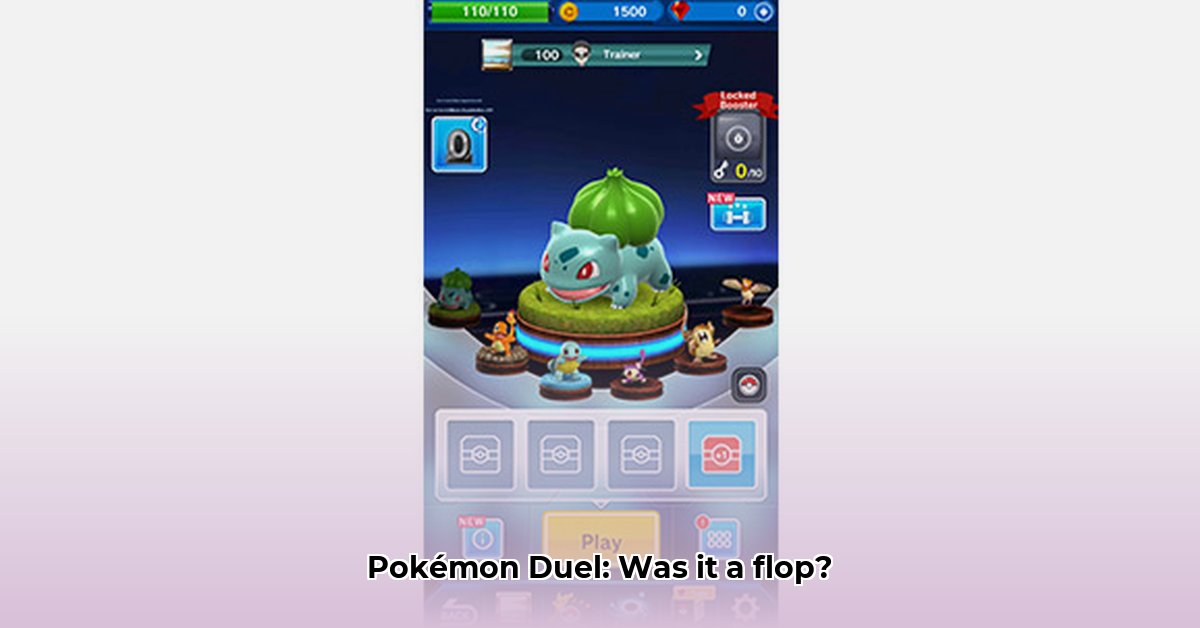
Pokémon Duel, a mobile strategy game blending the familiar Pokémon universe with board game mechanics, is no longer available for download. This post-mortem analyzes its successes and failures, offering valuable lessons for game developers and marketers.
Gameplay: A Winning, Yet Fleeting, Formula?
Pokémon Duel cleverly combined the Pokémon franchise with strategic board game elements. Players maneuvered Pokémon figures, utilizing unique abilities and strategic positioning to defeat opponents. This novel approach initially captivated a significant player base. However, the long-term engagement of this innovative gameplay remains questionable. Was the strategic depth sufficient to maintain player interest? Did the initial excitement translate into sustained playtime? Further investigation into player retention rates would provide crucial insights.
Community: A Passionate, But Fragmented, Base?
Pokémon Duel fostered a vibrant and engaged community. Players shared strategies, created guides, and participated in online tournaments, demonstrating the game's ability to cultivate strong player bonds. The structured competitive environment of in-game League Matches further strengthened community engagement. However, cross-platform incompatibility proved a significant limitation, hindering the growth of the player base. The inability for players on different mobile operating systems (iOS and Android) to easily play together likely prevented the game from reaching its full potential. Did this limitation significantly impact player retention and community growth? A comparative analysis of player counts across platforms could reveal valuable data.
Monetization: A Balanced Approach or Missed Opportunity?
Pokémon Duel employed a generally well-received in-app purchase model. Players acquired Gems (in-game currency) and Boosters (containing random Pokémon figures) through purchases, creating a revenue stream for the developers. Crucially, this system avoided the "pay-to-win" trap, fostering a sense of fairness among players. Nevertheless, the true effectiveness of this monetization strategy remains unquantifiable without access to internal financial data. Could alternate monetization strategies have generated higher revenue without compromising player satisfaction? A comparison with similar games' monetization models would be beneficial.
The Game's Demise: Unraveling the Mystery
The precise reasons behind Pokémon Duel's closure remain undisclosed by The Pokémon Company. Speculation points towards declining player numbers as a significant contributing factor. The evolving mobile gaming landscape and the emergence of competing titles likely impacted player retention. Internal strategic shifts within The Pokémon Company may also have played a role, irrespective of the game's financial performance. Without official data, a definitive conclusion regarding the game's downfall remains elusive. Was it a simple case of declining player numbers, or was it triggered by a confluence of factors? Market research comparing Pokémon Duel's performance to similar games could shed light on this.
Lessons Learned: A Roadmap for Future Game Development
Pokémon Duel's experience provides critical lessons for mobile game developers. The game's initial success underscores the importance of innovative core gameplay mechanics and a robust community building strategy. However, its closure highlights the crucial need for cross-platform compatibility and consistent adaptation to evolving player preferences. The game's demise serves as a cautionary tale, emphasizing the necessity of a holistic approach which incorporates a diverse set of factors, including a well-defined monetization system, continuous content updates, and a dedicated community management strategy.
Risk Assessment: Navigating the Challenges Ahead
| Risk Category | Specific Risk | Likelihood | Impact | Mitigation Strategy |
|---|---|---|---|---|
| Financial | Insufficient revenue, changing user spending habits | Medium | High | Diversify revenue streams; offer optional cosmetic items; regular content updates |
| Technical | Server instability, security breaches | Low | High | Robust infrastructure, regular security audits, frequent software updates |
| Market | Intense competition, shifting popularity of genres | High | High | Continuous market research; rapid adaptation to trends; unique gameplay features |
| Community Engagement | Player dissatisfaction, negative community feedback | Medium | Medium | Transparent communication; active community management; quick response to feedback |
The challenges faced by Pokémon Duel underscore the complex dynamics of the mobile gaming market. While a full understanding of its decline remains elusive without internal data, the lessons learned provide valuable insights for future game development.
How to Create a Successful Mobile Strategy Game
Key Takeaways:
- The lack of direct Pokémon Duel successors indicates a potential market opportunity.
- Understanding player preferences and unmet needs is paramount.
- Successful monetization and community building are crucial for long-term success.
- Analyzing Pokémon Duel's failure provides valuable lessons for future development.
Pokémon Duel's closure presents a unique opportunity for developers to learn from its successes and failures. This analysis provides a framework for creating a captivating and sustainable mobile strategy game.
Replicating Pokémon Duel's Success
Pokémon Duel's success stemmed from its innovative blend of strategy, accessible gameplay, and the iconic Pokémon brand. Key elements to consider include:
- Leveraging Existing IP: Utilizing established IPs can significantly reduce marketing costs and attract a readily available player base.
- Balancing Accessibility and Depth: Creating a game that's easy to learn but difficult to master.
- Collecting and Progression: Incorporating a collectible element to encourage prolonged engagement.
Avoiding Pokémon Duel's Pitfalls
Pokémon Duel's decline highlights several critical areas to avoid:
- Content Updates: Regular updates prevent player fatigue.
- Monetization: A fair and balanced monetization system is crucial.
- Community Engagement: Maintain open communication with players.
Building Your Own Strategy Game
- Market Research: Analyze the competitive landscape and identify underserved niches.
- Core Mechanics: Develop innovative and engaging core mechanics.
- Art Style & Brand: Create a visually appealing game and consider branding.
- Monetization: Implement a fair and transparent monetization strategy.
- Community: Foster a strong and dedicated community through regular communication.
| Feature | Pokémon Duel | Your Game |
|---|---|---|
| Core Gameplay | Figure placement on a board | (Define your core mechanic) |
| Monetization | Gacha system | (Define your monetization strategy) |
| Community Engagement | Active but limited; lacked cross-platform play | Active community management, frequent updates, cross-platform support |
Creating a successful mobile strategy game requires a comprehensive approach encompassing innovative gameplay, strategic monetization, and continuous community engagement. While replicating Pokémon Duel's success is not guaranteed, understanding its trajectory can significantly improve the odds of creating a captivating and thriving mobile game.
⭐⭐⭐⭐☆ (4.8)
Download via Link 1
Download via Link 2
Last updated: Saturday, May 10, 2025